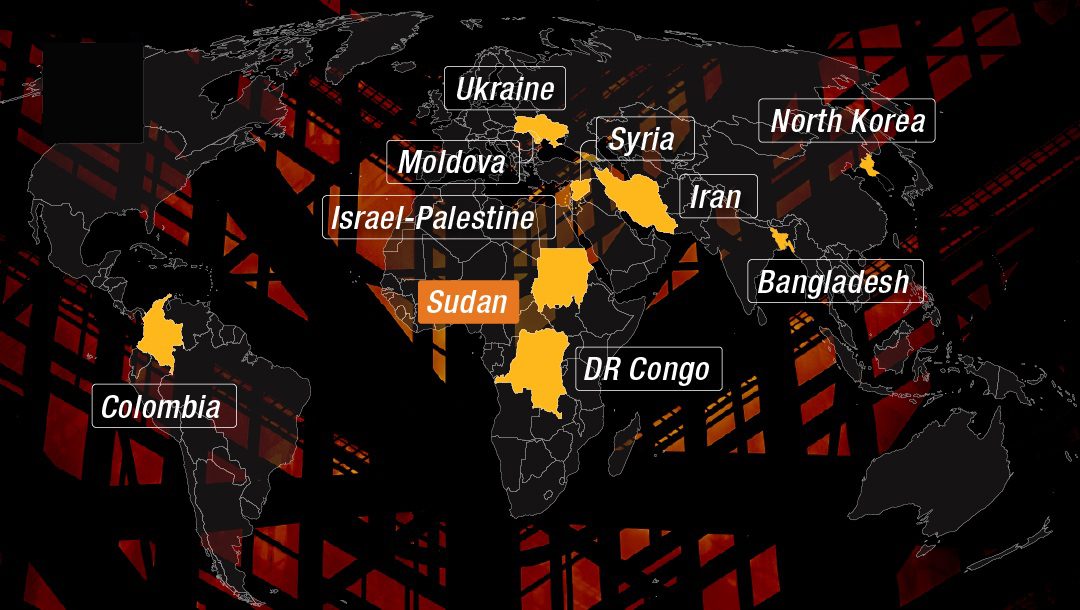
Conflicts Shaping the World: From Gaza to Ukraine
Gaza
Gaza remains a focal point of intense military confrontation in 2025, marked by airstrikes, ground operations, and a severe humanitarian crisis. Civilian infrastructure continues to suffer extensive damage. International concern over humanitarian access remains high.
Background:
The conflict stems from decades of Israeli-Palestinian tensions, recurring wars, and the political division of Palestinian territories.
Possible Future Solution:
A sustained ceasefire and international mediation could stabilize the situation. Long-term peace depends on renewed political negotiations.
West Bank
The West Bank faces escalating violence through military raids, settler clashes, and armed resistance. Security tensions disrupt daily life and governance. Political instability deepens in 2025.
Background:
The conflict is rooted in occupation, settlement expansion, and failed peace agreements.
Possible Future Solution:
De-escalation measures and political dialogue could reduce violence. International diplomacy remains crucial.
Ukraine
The Ukraine war continues with entrenched frontlines and advanced warfare tactics. Infrastructure damage and displacement remain widespread. Global security implications persist.
Background:
The conflict began with Russia’s invasion in 2022 amid geopolitical rivalry and security concerns.
Possible Future Solution:
Negotiated ceasefire talks and international security guarantees may open a path toward peace.
Sudan
Sudan’s civil war continues to devastate cities and rural areas alike. Millions face displacement and food insecurity. Fighting between rival factions shows little sign of slowing.
Background:
The war emerged from a power struggle following Sudan’s failed political transition.
Possible Future Solution:
Regional mediation and a civilian-led political framework could help end hostilities.
Myanmar
Myanmar remains engulfed in widespread armed resistance against military rule. Ethnic conflicts intensify across multiple regions. Human rights concerns dominate global attention.
Background:
The crisis followed the 2021 military coup that dismantled democratic governance.
Possible Future Solution:
Inclusive political dialogue and regional mediation may restore stability.
Yemen
Yemen experiences fragile calm in 2025 despite unresolved political divisions. Humanitarian needs remain extreme. Armed tensions persist beneath ceasefire agreements.
Background:
The conflict began as a civil war and evolved into a regional proxy struggle.
Possible Future Solution:
A permanent ceasefire and inclusive political settlement are essential.
Afghanistan
Afghanistan faces ongoing security challenges, economic collapse, and humanitarian distress. Armed groups remain active in several regions. International isolation continues.
Background:
The situation followed the Taliban’s return to power in 2021.
Possible Future Solution:
Economic engagement and regional cooperation could reduce instability.
Iran
Iran faces internal unrest and external tensions in 2025. Regional confrontations and sanctions pressure persist. Security dynamics remain volatile.
Background:
Long-standing geopolitical rivalries and domestic political challenges fuel instability.
Possible Future Solution:
Diplomatic engagement and regional de-escalation could ease tensions.
Moldova
Moldova faces security concerns linked to regional instability. Political pressure and hybrid threats challenge national stability. Tensions remain mostly non-kinetic.
Background:
The situation is influenced by unresolved territorial disputes and regional geopolitics.
Possible Future Solution:
European integration and diplomatic balance may strengthen resilience.
Mali, Burkina Faso, Niger (Sahel Region)
The Sahel remains plagued by militant insurgencies and political instability. Civilian populations face persistent insecurity. Military-led governments struggle to restore order.
Background:
Weak governance and economic hardship enabled extremist expansion.
Possible Future Solution:
Regional cooperation and long-term development strategies are critical.
Congo (DRC)
Eastern Congo continues to face armed group violence and displacement. Resource-driven conflict fuels instability. Peace efforts remain fragile.
Background (2 lines):
The crisis is rooted in ethnic tensions and competition over mineral wealth.
Possible Future Solution (2 lines):
Security reforms and regional diplomacy could reduce violence.
Bangladesh
Bangladesh experiences political unrest and border security challenges. Social tensions strain governance structures. Stability remains fragile.
Background:
Political polarization and regional pressures contribute to unrest.
Possible Future Solution:
Political dialogue and institutional reform may ease tensions.
Colombia
Colombia continues to face violence from armed groups and criminal networks. Rural regions remain most affected. Peace implementation faces obstacles.
Background:
The conflict traces back decades to insurgency and inequality.
Possible Future Solution:
Strengthening peace accords and rural development is key.
Conclusion
The wars and conflicts of 2025 reflect a world struggling with unresolved political, social, and economic challenges. While military responses dominate, sustainable peace depends on diplomacy, inclusive governance, and long-term international cooperation.
