hacklink hack forum hacklink film izle hacklink jetbahistipobetChicken Road

Russia-Ukraine War: How a 21st Century Conflict Shattered Global Order

Russia-Ukraine War: How a 21st Century Conflict Shattered Global Order

On February 24, 2022, Russia launched a full-scale invasion of Ukraine — an event that stunned the world and shattered decades of European peace. It was the largest military assault on a sovereign European nation since World War II, and its consequences were immediate and far-reaching.

What began as a “special military operation” quickly escalated into a brutal war, causing mass destruction, a refugee crisis, and thousands of civilian deaths. But this was more than just a regional conflict — it became a global turning point, reshaping geopolitics, reviving Cold War tensions, and challenging the foundations of the international order.

This article traces the origins, key moments, and worldwide impact of the Russia-Ukraine war — a conflict that has redefined the 21st century.

Vladimir Putin Invaded Mind

Vladimir Putin’s geopolitical strategy reflects an aggressive and expansionist mindset rooted in restoring Russia’s influence over former Soviet territories. His actions in Georgia (2008), Crimea (2014), and Ukraine (2022) demonstrate a pattern of military intervention masked as protecting Russian interests or ethnic Russians abroad. Putin views NATO’s eastward expansion and Western alliances as threats, prompting preemptive actions to destabilize neighboring countries and reassert dominance. His tactics often combine military force with hybrid warfare—cyberattacks, disinformation, and political manipulation. Many analysts argue that Putin’s ambitions extend beyond Ukraine, signaling a broader intent to challenge the post-Cold War global order and Western supremacy.

Key Events from 2014 to Present

February 2014: Russia Annexes Crimea

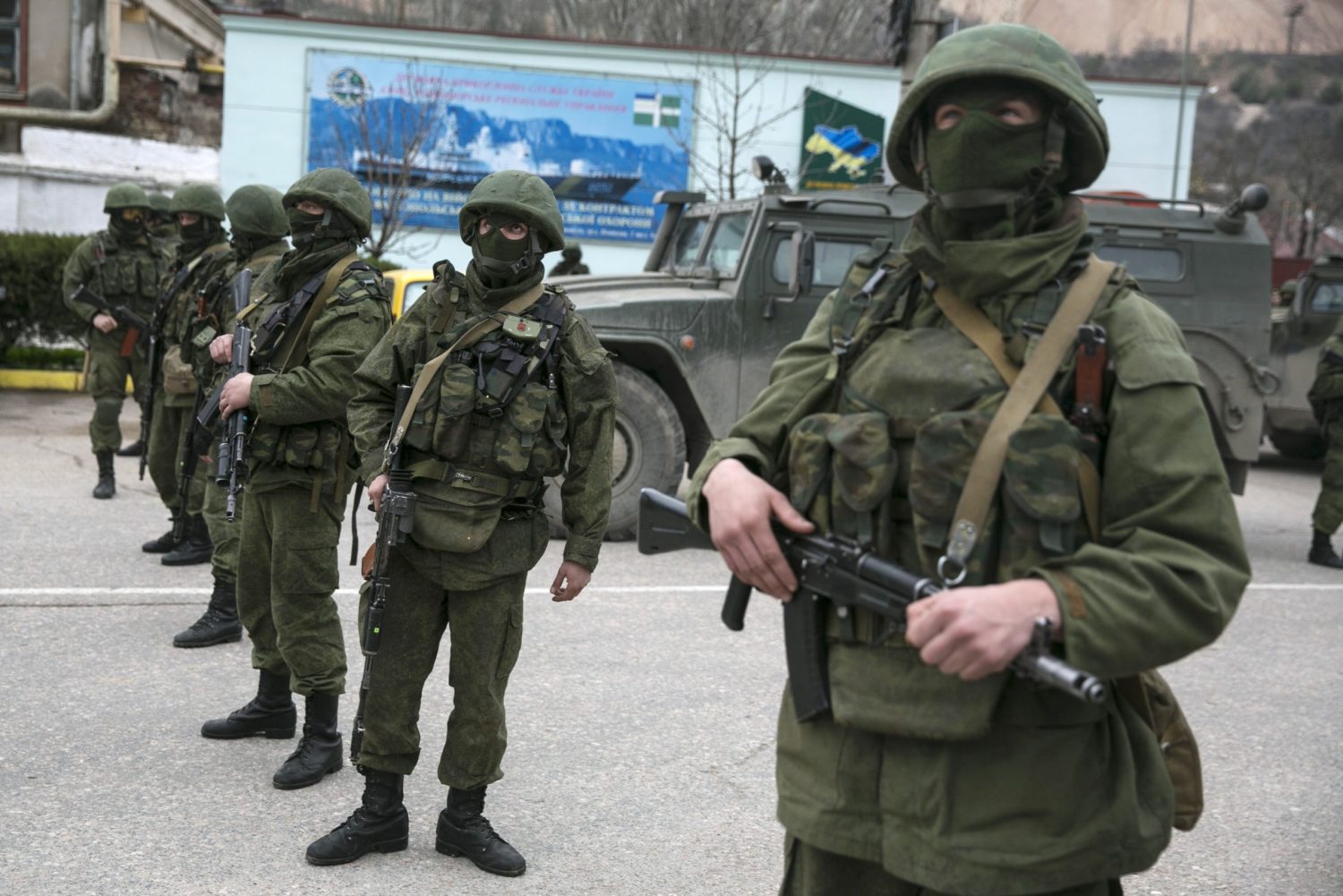
In February 2014, following the ousting of Ukraine’s pro-Russian president Viktor Yanukovych, Russian forces swiftly moved into Crimea, a strategic Black Sea peninsula. Unmarked troops—later confirmed as Russian—seized key infrastructure, while Moscow-backed authorities organized a controversial referendum in March. The vote, widely condemned as illegitimate by the West, claimed overwhelming support for joining Russia. Within weeks, President Vladimir Putin formalized Crimea’s annexation, triggering international outrage and sanctions. The move marked the first forcible redrawing of European borders since World War II, shattered post-Cold War security norms, and escalated tensions between Russia and the West.
atlanticcouncil.org/blog...

April 2014: Pro-Russian Insurgency Begins in Donbas

In April 2014, shortly after Russia’s annexation of Crimea, unrest erupted in Eastern Ukraine’s Donbas region — specifically in Donetsk and Luhansk. Pro-Russian separatists, allegedly backed by Moscow, seized government buildings, police stations, and declared “people’s republics,” demanding independence from Ukraine. These groups were supported by Russian political operatives, military advisors, and covert armed units, though the Kremlin officially denied involvement.

crisisgroup.org/europe-c...

The Ukrainian government responded with military operations, leading to a bloody and prolonged conflict. What began as a local insurgency quickly escalated into a full-scale war in the east, resulting in thousands of casualties and widespread displacement.

The Donbas conflict marked the start of an undeclared war between Ukraine and Russia and laid the groundwork for the 2022 invasion. It also exposed deep divisions within Ukrainian society and highlighted Russia’s willingness to use hybrid warfare tactics — including propaganda, cyberattacks, and unmarked troops — to destabilize its neighbor.

February 2022: Full-Scale Russian Invasion Begins

On February 24, 2022, the world woke to the shocking news that Russia had launched a full-scale invasion of Ukraine, triggering the most significant military conflict in Europe since World War II. The assault began at dawn with a barrage of Russian missile strikes targeting key Ukrainian cities, including the capital Kyiv, the northeastern hub Kharkiv, and strategic airfields and military bases across the country. Ground forces advanced from multiple directions—north from Belarus, east from the Russian border, and south via the annexed Crimean Peninsula.

President Vladimir Putin framed the invasion as a “special military operation” intended to “demilitarize and de-Nazify” Ukraine. However, the international community swiftly condemned the move as a blatant and unprovoked act of aggression, violating Ukraine’s sovereignty and international law. Ukrainian President Volodymyr Zelenskyy vowed defiance, rallying his citizens and refusing offers to evacuate.

Ukraine’s spirited resistance, both militarily and symbolically, galvanized global support. Western nations responded with unprecedented economic sanctions on Russia, military aid to Ukraine, and diplomatic isolation of Moscow. The invasion not only marked the collapse of post-Cold War diplomacy but also reignited global tensions reminiscent of the Cold War, reshaping alliances and fueling a deepening geopolitical crisis that continues into the present day.

aljazeera.com/news/2022/...

March 2022: Kyiv Offensive Fails; Russia Shifts Focus to Eastern Ukraine

By March 2022, it became clear that Russia’s ambitious strategy to seize Ukraine’s capital, Kyiv, in a matter of days had backfired dramatically. Initially, Moscow launched a multi-pronged attack from the north, aiming to quickly decapitate the Ukrainian government and install a pro-Russian regime. However, fierce Ukrainian resistance—bolstered by local defense forces, international support, and strong leadership from President Volodymyr Zelenskyy—stalled the Russian advance outside the capital.

Russian troops found themselves bogged down in the suburbs of Kyiv, suffering from poor supply lines, inadequate planning, low morale, and heavy casualties. Images of destroyed Russian convoys and abandoned tanks outside towns like Bucha and Irpin began to circulate worldwide. Ukrainian ambushes, drone strikes, and asymmetric tactics inflicted serious losses on Russia’s overstretched military.

Faced with logistical chaos and mounting international pressure, the Kremlin ordered a withdrawal from the northern front by early April, officially reframing it as a “gesture of goodwill.” However, the pullback was seen globally as a humiliating setback for President Putin’s war plan. The failure of the Kyiv offensive marked a pivotal moment in the war, forcing Russia to reassess its objectives.

In the aftermath, Russia redirected its efforts toward the eastern Donbas region, seeking to regain momentum by consolidating control over Luhansk and Donetsk oblasts. This strategic shift also signaled a transition to a more grinding, attritional phase of warfare. Meanwhile, Ukraine’s successful defense of its capital became a powerful symbol of national resilience and defiance on the global stage.

September 2022: Ukraine Recaptures Kharkiv Region

In a stunning counteroffensive in September 2022, Ukrainian forces recaptured vast swaths of the Kharkiv region, dealing a major blow to Russia’s military campaign. Swift, coordinated assaults forced Russian troops into a chaotic retreat, abandoning weapons and positions across dozens of towns and villages. The lightning advance regained over 6,000 square kilometers in just days, boosting Ukrainian morale and international support. The operation exposed the vulnerability of Russian defenses and signaled a shift in battlefield momentum. Kyiv’s success in Kharkiv demonstrated the effectiveness of Western-supplied weapons and marked one of the war’s most decisive and symbolic Ukrainian victories.

October 2022: Crimea Bridge Explosion Shakes Russian Stronghold

On October 8, 2022, a massive explosion rocked the Kerch Bridge—the vital structure linking mainland Russia to occupied Crimea—dealing a symbolic and strategic blow to Moscow. The blast, which partially collapsed sections of the road and rail bridge, killed at least three people and temporarily disrupted a crucial supply line used to funnel troops, fuel, and weapons to Russian forces in southern Ukraine.

While Ukraine did not officially claim responsibility, the attack was widely celebrated in Kyiv and seen as a daring act of resistance. The Kremlin immediately accused Ukrainian intelligence of orchestrating the sabotage, escalating missile strikes across Ukraine in retaliation. The incident marked a turning point in the conflict, undermining Russia’s image of control over Crimea and highlighting vulnerabilities in its logistics.

More than just infrastructure damage, the explosion sent a clear message: nowhere in occupied territory was beyond Ukraine’s reach. It intensified global scrutiny and rattled the confidence of Russian military planners.

January–May 2023: Stalemate and Trench Warfare Grip the Frontlines

From January to May 2023, the war in Ukraine descended into a brutal stalemate, with both sides entrenched in World War I-style trench warfare along a static front. Fierce battles raged in areas like Bakhmut and Avdiivka, but territorial gains were minimal and costly. Artillery duels, drone strikes, and infantry skirmishes defined the grim daily reality. Muddy fields, mined zones, and fortified positions slowed advances to a crawl. Despite continued Western support for Ukraine and Russian attempts to push forward, neither side achieved a decisive breakthrough. The war entered a grinding phase of attrition, with no end in sight.
June 2023: Ukrainian Counteroffensive Begins Amid High Stakes

In June 2023, Ukraine launched its long-awaited counteroffensive, aiming to reclaim occupied territories in the south and east after months of strategic buildup. Backed by advanced Western weaponry—including Leopard tanks, HIMARS systems, and armored vehicles—Ukrainian forces targeted key fronts in Zaporizhzhia and Donetsk. The operation sought to breach Russian defensive lines fortified with trenches, mines, and artillery.

Progress was slower and costlier than expected. Ukrainian troops faced intense resistance, incurring significant losses while making incremental gains. Still, Kyiv succeeded in liberating several villages and testing Russian vulnerabilities, particularly in logistics and morale. The counteroffensive signaled Ukraine’s determination to regain control without negotiating on territorial concessions.

Western allies watched closely, seeing the campaign as a litmus test for continued support. While not a sweeping breakthrough, the offensive reshaped battlefield dynamics and demonstrated Ukraine’s evolving military capabilities. It also intensified global debates over the war’s trajectory and prospects for a negotiated peace.

2024–2025: War Grinds On Amid Sanctions, Drone Warfare, and Western Backing

From mid-2024 into 2025, the Russia-Ukraine war entered a prolonged and exhausting phase marked by grinding battles, economic pressure, and escalating drone warfare. Frontlines remained largely static, but both sides intensified air assaults and reconnaissance using advanced drone fleets, turning the skies into a new front. Russia ramped up missile strikes on Ukrainian infrastructure, while Ukraine targeted logistics hubs and military bases deep inside Russian-occupied territory.

International sanctions against Moscow tightened further, choking its access to key technologies and financial systems. Yet, Russia adapted by deepening ties with China, Iran, and North Korea. Meanwhile, Ukraine continued to receive substantial Western military and financial aid, including long-range missiles, air defenses, and training.

Despite mounting war fatigue, neither side showed willingness to negotiate. The conflict became a war of attrition, draining economies and testing alliances. For the global community, the war underscored the dangers of unresolved conflict, hybrid warfare, and the high cost of geopolitical confrontation in the 21st century.

⚔️ Historical Background: What Led to This War?

To understand why Russia invaded Ukraine in 2022, we must trace back to the collapse of the Soviet Union in 1991. Ukraine declared independence in that year, severing political ties with Moscow. Over the next decades, Ukraine tilted toward the West, aspiring for EU and NATO membership — a move seen by Russia as a strategic threat.

Tensions peaked in 2014, when Russia annexed Crimea and supported separatists in Donetsk and Luhansk. Western powers responded with sanctions, but Putin achieved a key objective: establishing a military and political foothold in Ukraine. However, the West underestimated the long-term consequences.

By 2021, Russia amassed over 100,000 troops along the Ukrainian border. Despite international diplomacy, Russia launched a “special military operation” — a term it used to avoid calling it a war. But the reality was clear: Europe was witnessing its most violent conflict in decades.

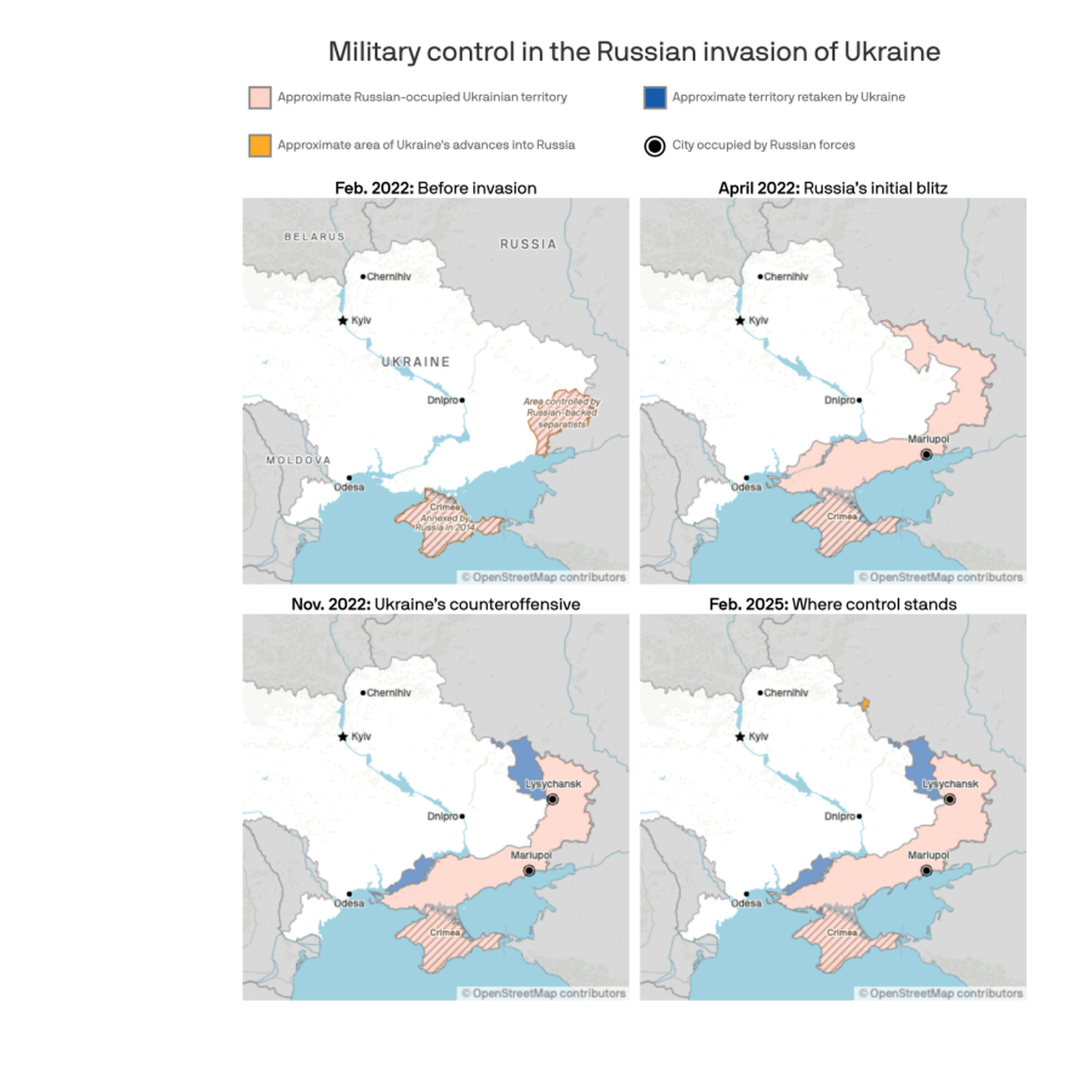
🗺️ Map Visual: Territorial Changes from 2014 to 2025

axios.com/2025/02/24/ukr...

💣 Military Strategy and Key Battles

The initial Russian strategy was swift regime change — capturing Kyiv and replacing Zelenskyy. However, Ukrainian forces, empowered by NATO intelligence and fierce resistance, pushed Russian troops back from Kyiv by April 2022.

Major battles included:

  • Battle of Mariupol (2022): Russia gains control after a brutal siege.

  • Kherson Counteroffensive (2022): Ukraine retakes key southern region.

  • Bakhmut & Donbas front (2023): Heavy casualties on both sides.

  • Drone and cyber warfare emerged as a defining element, with Iran-supplied drones used by Russia and AI-enhanced tactics by Ukraine.

Despite nuclear threats and energy blackmail, the war turned into a long-term attrition conflict, similar to World War I trench warfare in 2023–2025.

💬 Quotes from Global Leaders

“We will not give up. We will fight for every inch of our land.”
Volodymyr Zelenskyy, President of Ukraine

“The goal is to demilitarize and de-Nazify Ukraine.”
Vladimir Putin, President of Russia

“The United States stands firmly with the people of Ukraine. Democracy will prevail.”
Joe Biden, President of the USA

🌐 Global Impact: Sanctions, Alliances, and Energy Wars

The war triggered the toughest economic sanctions ever placed on a major power. The West froze Russian assets, expelled banks from SWIFT, and limited oil/gas trade. In return, Russia weaponized energy — cutting gas supplies to Europe, causing an energy crisis.

Other impacts:

  • Finland and Sweden officially joined NATO in response to Russia’s invasion of Ukraine, ending decades of military neutrality. This historic shift marked a major expansion of the alliance and a significant geopolitical realignment in Northern Europe’s security landscape.

  • Countries like India and China adopted a neutral stance on the Russia-Ukraine war, avoiding direct condemnation. However, they strategically capitalized on the situation by purchasing heavily discounted Russian oil, bolstering their energy security while maintaining diplomatic balance with both sides.
  • Global food shortages intensified as Ukraine, one of the world’s top grain exporters, faced blockades and disrupted agricultural production. The war halted vital shipments of wheat and corn, triggering rising prices, hunger crises, and supply chain instability worldwide.

🧠 Psychological and Cultural Warfare

The Russia-Ukraine conflict has been fought not only on the battlefield but also in the realm of information and culture. Both sides have deployed sophisticated psychological and cultural warfare tactics to shape public opinion, influence global narratives, and sustain morale. Ukraine effectively leveraged platforms like TikTok, Twitter, and YouTube to spread viral videos, highlight civilian resilience, and rally international support. These digital tools became powerful weapons of soft power. Meanwhile, Russia intensified its use of state-controlled media and disinformation campaigns, portraying NATO and the West as aggressors and justifying its actions as defensive. Truth became another casualty of war.

📉 Death Toll and Humanitarian Crisis

  • Over 500,000 military casualties estimated on both sides, including killed and wounded soldiers.

  • Thousands of civilian deaths reported, especially in heavily bombed cities like Mariupol, Kharkiv, and Bucha.

  • Bucha became a symbol of Russian war crimes after mass graves and executions of civilians were discovered.

  • More than 15 million Ukrainians displaced, with millions fleeing to Europe and others displaced internally.

  • Attacks on infrastructure have led to widespread food, water, and medical shortages.

  • Residential areas, hospitals, and schools have been repeatedly targeted, worsening the civilian toll.

  • The war created the largest European refugee crisis since World War II, according to UN agencies.

  • Millions of children affected by interrupted education, trauma, and loss of family members.

  • International humanitarian organizations face ongoing challenges delivering aid due to active combat zones.

  • The global community continues to call for urgent humanitarian support and accountability for war crimes.

    🔥 Key Political Blunders by Russia

    • Underestimating Ukrainian Resistance
      Russian leadership wrongly assumed that Ukrainian forces would surrender quickly. Instead, they encountered fierce, well-organized resistance across all major fronts, particularly around Kyiv and Kharkiv.

    • Misjudging President Zelenskyy’s Resolve
      Moscow expected Volodymyr Zelenskyy to flee or capitulate within days. Instead, his decision to stay and lead from the front galvanized the nation and boosted global sympathy.

    • Overconfidence in Soviet-Style Military Strategy
      Russia relied heavily on outdated doctrines—large mechanized columns and heavy artillery barrages—which proved vulnerable to modern drone warfare and guerrilla tactics used by Ukrainian troops.

    • Failure to Disrupt Ukrainian Communications and Infrastructure
      Russia failed to immediately disable Ukraine’s communication networks and supply lines, allowing coordination between military units and global media outreach.

    • Underestimating the Western Response
      The Kremlin did not anticipate the speed and scale of Western sanctions, military aid, and NATO cohesion, which significantly bolstered Ukraine’s defense capabilities and isolated Russia economically.

      📌 Footnotes & References

      1. United Nations Ukraine Crisis Update (2024)

      2. NATO’s response to Russia’s invasion of Ukraine

      3. BBC Timeline of Russia-Ukraine War

      4. Russian attack on humanitarian aid point kills seven, Ukraine says

      🧭 Conclusion: A War that Redefined the 21st Century

      The Russia-Ukraine war is not just about territorial disputes — it’s about the fragility of global peace, the limits of authoritarianism, and the resilience of democracy. It altered global alliances, disrupted economies, and triggered a new era of information warfare. As the world watches and hopes for peace, this conflict will remain a case study of 21st-century geopolitics, shaping military doctrines, diplomatic strategies, and national policies for years to come.

      Read More :Martindox

Leave a Reply

Your email address will not be published. Required fields are marked *