
US–China Tensions Rise After New Trade Sanctions
Over the past several months, the US and China have found themselves locked in a widening economic confrontation. The escalation stems primarily from fresh US trade sanctions, countermeasures by Beijing, and intensifying strategic rivalry in technology, energy, and geopolitical influence. As both sides double down, the global economy, supply chains, and diplomatic norms are facing steep pressure. Below is an analysis of what led to this moment, what’s happening now, and what the consequences might be.
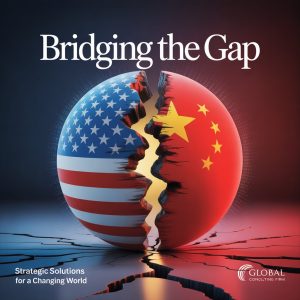
Background: Build-up to New Sanctions
Long-standing trade frictions
The US-China trade relationship has been contentious for many years. Issues such as trade deficits, forced technology transfers, intellectual property (IP) rights, subsidies to Chinese state-owned or state-affiliated firms, and overcapacity in industries such as steel and solar panels have long been points of US concern. Council on Foreign Relations+2Carnegie Endowment+2
Both administrations (Trump’s earlier term and now renewed assertive policies) have taken steps to restrict Chinese access to advanced technologies and to respond to what the US sees as unfair trade practices. China, for its part, has pushed back with its own industrial policy, increased self-sufficiency goals (e.g. “Made in China” / supply chain resilience), retaliatory tariffs, export controls, and diplomatic protest. Council on Foreign Relations+2U.S. GAO+2
Recent triggers for escalation
Some recent developments have pushed the tension into a new phase:
-
US export controls and restricted entity lists: The US has imposed new export restrictions on advanced technologies—especially semiconductors—and added Chinese firms to restricted trade lists. These steps aim to limit China’s ability to acquire or develop cutting-edge capabilities. Reuters+2Al Jazeera+2
-
Tariffs and calls for secondary sanctions: The US has threatened or imposed higher tariffs on certain Chinese imports and urged its allies (including G7 countries) to impose tariffs on Chinese goods or penalize countries (like China or India) for buying Russian oil. Al Jazeera+2Reuters+2
-
Chinese probes and countermeasures: In retaliation, China has launched investigations into US chipmakers, alleged dumping and discrimination, and has lodged complaints both in bilateral forums and at the WTO. China also accuses the US of economic coercion. Reuters+2Reuters+2
These escalations are happening alongside broader geopolitical tensions—involving Russia, Ukraine, trade alliances, technology competition, and concerns over data sovereignty and digital infrastructure (TikTok is one of the flashpoints). AP News+2AP News+2
What’s New: The Latest Sanctions & Reactions
The most recent phase of sanctions has several novel features:
-
Broadening scope of export controls and tariffs
The US is not just targeting select high-technology materials but also pushing harder on trade in energy (e.g. oil), pharmaceuticals, and supply chains connected to semiconductors. The US has also called for secondary sanctions on countries perceived as facilitating Chinese ties with Russia through oil purchases. Al Jazeera+1 -
Chinese regulatory and defensive measures
China has responded with formal investigations (e.g. into US chip exports and alleged dumping), tighter scrutiny of foreign firms, and—in some sectors—restrictions or bans on exports of key materials critical for chipmaking (in past instances) when faced with US tech export limitations. Reuters+2AP News+2 -
Diplomatic friction and narrative escalation
Public statements on both sides have become more forceful. China has accused the US of “bullying” and using unilateral coercion. The US frames its actions as necessary to protect national security, intellectual property, and the integrity of its supply chains. Reuters+1 -
Ties to global issues amplify stakes
The trade sanctions are no longer purely about bilateral trade or technology. The issues around Russian oil purchases, TikTok’s ownership and data concerns, and investigations into antitrust or monopoly behavior (e.g. Nvidia) mean these trade moves interact with foreign policy, national security, and international norms. The Washington Post+2AP News+2
Economic and Strategic Impacts
On both economies
-
Disruption of supply chains
Firms in many industries (especially semiconductors, electronics, consumer goods) are facing uncertainty. Tariffs increase costs; export controls force companies to adjust sources of supply, sometimes at higher cost or with lower reliability. Many companies are evaluating “China+1” strategies (shifting part of supply away from China or diversifying). arXiv+2European Central Bank+2 -
Inflationary pressures
Higher tariffs often translate to higher costs for importers, which can feed into consumer prices in both the US and its trading partners. Meanwhile, supply constraints in critical inputs (e.g. rare materials for chips) exert upward pressure. This risks slowing consumption or raising costs for consumers. -
Retaliation and export loss
Chinese retaliatory tariffs mean US exporters (especially in agriculture, energy, and raw materials) face more difficulty. There’s also risk to US companies operating in China due to counter-regulation or regulatory risk. According to a survey, many US firms in China expect lower revenues due to the trade environment. AP News -
Diversion of trade flows
Some Chinese exports could shift toward other markets (Europe, Southeast Asia) as US demand becomes more expensive or restricted. This could relieve some of the pressure on Chinese manufacturers, but only partially. The global trade network is changing. European Central Bank+1
On geopolitics, diplomacy, and norms
-
Erosion of trust and multilateral rules
The frequent resort to tariffs, export bans, entity‐lists, and secondary sanctions undermines multilateral trade governance in institutions like the WTO. China argues many US measures violate international law or norms. Council on Foreign Relations+1 -
Technological decoupling
Restrictions on technology (semiconductors, AI, advanced materials) are pushing China to accelerate its domestic development and self-reliance. The US, in turn, seeks to limit China’s access to certain technologies to safeguard national security. This creates bifurcated tech ecosystems, and competition in R&D, fabrication, and standards. Reuters+2Carnegie Endowment+2 -
Alliance building and pressure from third parties
The US is attempting to build coalitions (G7, NATO) to coerce or persuade countries to limit interactions (e.g. over Russian oil purchases), or to align on standards/regulation. Other nations are caught between economic incentives to do business with China and pressure from the US. Al Jazeera+2Financial Times+2 -
Domestic political implications
In the US, both major political parties show concern over Chinese trade practices, overcapacity, environmental and labor standards. Pressure from industries harmed by imports and from public sentiment is pushing for strong responses. In China, there’s increased emphasis on protecting domestic industry, maintaining employment, and projecting strength in the face of perceived external threats. Reuters+1
Risks, Challenges, and Unintended Consequences
-
Risk of overreach and blowback
Aggressive sanctions or tariffs risk serious retaliation, supply chain breakdowns, sanctions on US companies, or even embargo-type measures from China. The interconnectedness of economies means both sides suffer. -
Global economic slowdown
With trade flows disrupted, investment hesitancy rising, inflation elevated, global growth may suffer. Countries allied to one side or dependent on trade with China or the US are vulnerable. -
Fragmentation of markets and standards
The ideological/strategic competition risks fragmenting global trade, finance, and tech standards. We may see separate ecosystems in AI, internet governance, semiconductors, or even financial transactions. -
Strained multilateral institutions
The WTO and similar bodies may find their roles weakened if both sides increasingly act unilaterally or multilaterally in ad hoc coalitions. Dispute settlement, trade norms, and rules enforcement come under stress. -
Potential for escalation into non-economic fronts
As economic tools reach limits, tensions may spill more into military, diplomatic, or cyber dimensions. Miscalculations—or accusations—could escalate.
What Could Happen Next
Here are scenarios and turning points to watch:
-
Negotiation and partial de-escalation
There is still a possibility for talks to yield limited agreements: easing some export restrictions, agreeing on specific industry cooperation, or calibrating tariffs to reduce pressure. Diplomatic channels (bilateral, multilateral) will be key. Recent trade talks in Spain reflect attempts in this vein. Al Jazeera+2The Washington Post+2 -
Escalation of sanctions / tit-for-tat measures
If neither side backs down, we can expect more sanctions, more export controls, more sectoral targeting. Novel sectors (e.g., rare earths, renewable technologies, AI infrastructure) may become hot zones. -
Supply chain reorientation
Global businesses will continue to adjust. Some relocation out of China (or into China for firms hedging), more regional supply chains, especially in Asia, Europe, etc. The “China+1” or “China-region” strategy will grow more common. -
Allied coordination or multilateral frameworks
The US might succeed (to varying degrees) in getting partners to align on trade restrictions, standards, or regulatory regimes. China, similarly, may deepen trade ties with other large markets (e.g. ASEAN, Africa, its Belt & Road partners) or reinforce internal markets. -
Long-term strategic realignment
Over time, this tension may harden into more permanent divisions: different tech standards, separate digital ecosystems, financial networks, and more self-reliant technological and industrial strategies from both sides.
Conclusion
The new wave of US trade sanctions and the corresponding Chinese responses mark a significant ramp-up in US–China strategic competition. They amplify economic risk, heighten geopolitical tension, and put strain on global norms and supply chains. While the goals on both sides—protecting national interest, economic security, global competitiveness—are clear, the path forward is fraught with dangers: miscalculations, unintended fallout, and long-term fragmentation.
Whether this becomes a reset of global trade and technological order or a phase of acute tension that can be negotiated down will depend on leadership decisions, diplomacy, and how willing both sides (and their allies) are to absorb costs in pursuit of grand strategy.
