

Iran’s Nuclear Program 2025: JCPOA Collapse, U.S.–Israeli Strikes and Rising Middle East Risks
1 Background: The Collapse of JCPOA and Rising Tensions
The 2015 Joint Comprehensive Plan of Action (JCPOA) was intended to constrain Iran’s civilian nuclear program in exchange for sanctions relief. In 2018, the U.S. withdrew from the deal under President Trump and reimposed sanctions. Iran responded by accelerating uranium enrichment beyond JCPOA limits. By 2021–2023, it had enriched uranium to 60 percent purity—far exceeding the 3.67 percent cap—and was suspected of seeking higher grades. In May 2025, the IAEA reported a 50 percent increase in Iran’s near‑weapons‑grade uranium stockpile, with over 409 kg of 60 percent enriched uranium detected.
Iran Nuclear Program
Iran’s nuclear program, launched in the 1950s under the U.S.-led Atoms for Peace initiative, has evolved into one of the most contentious global security issues. While Iran insists its program is for peaceful energy and medical purposes, Western nations, especially the U.S. and Israel, suspect covert weapons development. The 2015 Joint Comprehensive Plan of Action (JCPOA) temporarily curtailed Iran’s nuclear activities, but its collapse in 2018 reignited tensions. In 2025, following military strikes and reduced IAEA oversight, the program’s trajectory remains uncertain—raising concerns about regional proliferation, arms races, and the urgent need for diplomatic resolution.
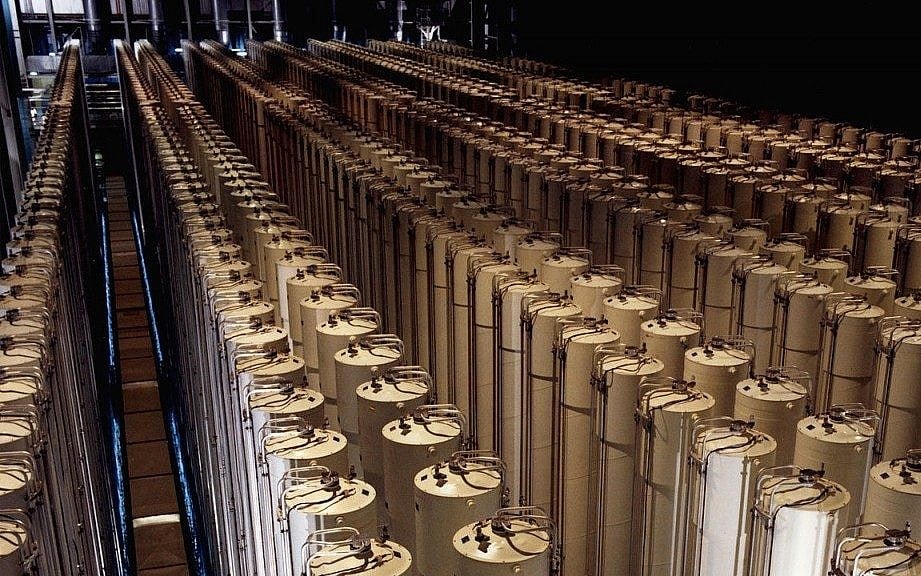
Origins and Collapse of the JCPOA
-
JCPOA Overview (2015): The Joint Comprehensive Plan of Action, adopted in July 2015 by Iran and the P5+1 countries, placed strict limits on Iran’s nuclear program. These included capping enrichment at 3.67% U‑235, reducing low‑enriched uranium stockpile to 300 kg, restricting centrifuge types and numbers (max 6,104 IR‑1 centrifuges), and halting R&D of advanced centrifuges for 10–15 years.
-
U.S. Withdrawal (2018): In May 2018 President Trump withdrew the U.S. from the JCPOA, reimposed broad sanctions, citing deficiencies in oversight and the failure to address Iran’s missile and regional behavior. Iran began gradually breaching JCPOA constraints, installing advanced centrifuges and enriching beyond the 3.67% limit.
Iran’s Escalating Enrichment (2019–2023)
-
Accelerated Expansion: By early 2020, following the assassination of key nuclear scientist Mohsen Fakhrizadeh, Iran officially declared it would abandon all limits under the JCPOA, increase enrichment to 20% and deploy advanced IR‑6 centrifuges.
-
Shift to High Purity: From 2021 onward, Iran began enriching uranium up to 60% U‑235, a level just short of weapons grade—pursued particularly at the Fordow Fuel Enrichment Plant (FFEP) and Natanz Pilot Fuel Enrichment Plant (PFEP).
The IAEA’s May 2025 Report & Stockpile Growth
-
Stockpile Surge: As of 17 May 2025, the IAEA reported Iran had accumulated 408.6 kg of uranium enriched to 60% U‑235 (U‑mass), a nearly 50% increase—up ~133.8 kg from February. Overall enriched uranium stock reached 9247.6 kg across all enrichment levels.
-
Implications: That high‑purity quantity alone could be sufficient for approximately 9–10 crude nuclear weapons, if further refined—raising alarm among intelligence agencies that some stockpile could be weaponized within weeks.
-
Verification Gaps & Non‑Compliance: The IAEA censured Iran for not cooperating fully—failing to explain traces of nuclear material at undeclared sites (Lavisan‑Shian, Varamin, Turquzabad) and refusing to maintain JCPOA monitoring apparatus.
Technical Capacity, Nuclear Timeline & Rising Geopolitical Risks
-
Production Rates: Between February and mid‑May 2025, Iran produced about 19.2 kg (hex mass) of near‑60% enriched uranium at PFEP (≈13 kg U‑mass), equating to ~0.2 kg/day (~5.9 kg/month). Combined with Fordow it reached ~1.25 kg U‑mass/day (~37.5 kg/month), translating into an annual near‑60% output around ~456 kg U‑mass.
-
Deployment of Advanced Centrifuges: Iran has accelerated installation of IR‑6 centrifuges—three times as efficient as IR‑1 models—across enrichment facilities, significantly reducing the time needed to produce weapons‑usable uranium. The Fordow site now operates linked cascades enabling sequential enrichment from natural uranium to 60% in one flow.
-
Regional Tensions & Military Risk: In June 2025 Israel reportedly launched airstrikes on Iran’s Natanz and Fordow facilities, aiming to disrupt the expanding nuclear capability, leading to retaliatory strikes and widespread geopolitical escalation. Despite infrastructural damage, IAEA reported no radiological release; underground sites remain operational.
2. Uranium Enrichment and IAEA Inspection Challenges
The International Atomic Energy Agency (IAEA), tasked with verifying the peaceful nature of Iran’s nuclear program, has encountered mounting challenges since the collapse of the JCPOA framework. Over recent years, Iran has systematically reduced transparency, obstructed routine inspections, and denied full access to key nuclear facilities. In a significant escalation, Tehran removed surveillance cameras, disabled online enrichment monitors, and restricted IAEA inspector access—especially those with deep institutional knowledge of Iran’s nuclear infrastructure.
In June 2025, the IAEA Board of Governors issued a rare formal censure of Iran, marking the first such condemnation in two decades. This move came after Iran expelled several senior IAEA inspectors and denied reinstallation of monitoring equipment at its underground facilities. While the IAEA retains a presence in the country, Director General Rafael Grossi warned that the agency’s “visibility into Iran’s nuclear program is diminishing rapidly.”
Despite diplomatic friction, Iran continues to operate high-efficiency centrifuge cascades at major enrichment sites, including Fordow, Natanz, and Esfahan. Notably, uranium enriched up to 83.7% purity—just below weapons-grade (90%)—was detected by the IAEA in early 2025 at Fordow. Iranian officials claimed the enrichment spike was accidental, but Western intelligence agencies suspect otherwise, citing the precision required for such levels.
Critics argue that Iran’s refusal to fully cooperate with the IAEA, coupled with its advanced enrichment capabilities, could enable a “nuclear breakout”—where Iran rapidly produces a nuclear weapon before it can be diplomatically or militarily stopped. Others fear a covert “sneak-out” using undeclared facilities. As regional and global tensions grow, the erosion of verification measures significantly undermines confidence in Iran’s nuclear intentions and raises the risk of miscalculation or conflict.
3. U.S. and Israeli Military Campaign against Iran in June 2025
Operation Rising Lion: Israel’s Pre‑emptive Strike (June 13–15)
On June 13, 2025, Israel initiated Operation Rising Lion, targeting more than 100 Iranian sites—predominantly nuclear facilities, IRGC command centers, and missile infrastructure in Natanz, Isfahan, Tehran, Tabriz, and other strategic locations. The operation began with coordinated Mossad-led sabotage efforts, including smuggling explosive drones and weapon caches inside Iran and deploying covert commandos to disable air defenses and missile transport systems. The Israeli Air Force then launched five waves of airstrikes involving over 200 aircraft and 330 munitions, striking key nuclear facilities and IRGC targets, and killing senior military and scientific figures.
Prime Minister Netanyahu framed the assault as a necessary defense against Iran’s accelerated nuclear program, warning that it could have produced a bomb “within a few months”. Iranian media later confirmed that over 70 individuals, including IRGC officers and nuclear scientists, were killed, while damage extended into civilian areas, fueling international concern over proportionality.

Operation Midnight Hammer: U.S. Joins the Campaign (June 22)
On June 22, the United States launched Operation Midnight Hammer, aligning directly with Israel’s earlier strikes to target Iran’s deep‑buried nuclear infrastructure at Fordow, Natanz, and Isfahan.
Seven B‑2 Spirit Bombers & First Operational Use of the MOP
Seven B‑2 Spirit stealth bombers—airborne nonstop from Whiteman AFB in Missouri with aerial refuelings—carried the GBU‑57A/B Massive Ordnance Penetrator (MOP), a 30,000-lb bunker-buster bomb used operationally for the first time in combat. These aircraft soared silently over the Gulf and Iran to deliver 14 MOPs, six each on Fordow’s ventilation shafts and two at Natanz.

Tomahawk Missile Strikes at Isfahan
Simultaneously, U.S. Navy submarines launched over two dozen Tomahawk cruise missiles to strike surface infrastructure at Isfahan, targeting uranium conversion and metallurgical buildings outside the hardened underground sites.
Damage Assessment: “Extremely Severe” — But Not Absolute
U.S. officials termed the strikes “extremely severe”, asserting that the nuclear infrastructure was severely degraded. However, U.S. intelligence later downgraded initial estimates, indicating while the sites suffered heavy damage, they were not completely destroyed—and Iran may have preemptively moved critical enrichment equipment or materials.
🔎 Satellite Imagery & Strategic Context
Satellite pictures, later shared by Maxar and AP, revealed multiple crater clusters atop Fordow, blocked tunnel openings, and ash around excavation sites—evidence of successful deep‐penetration strikes into the Zagros Ridge. Despite this, analysts cautioned that underground enrichment halls may remain intact, and Iran’s capacity to restart centrifuge operations within months remains plausible if hidden assets are rediscovered or reactivated.
Tactical Coordination & Strategic Innovations
These operations exemplified high-level coordination between intelligence and military services. Mossad’s covert infrastructure within Iran significantly blunted Iranian retaliatory capacity—reducing anticipated missile launch waves from up to 1,000 down to around. Simultaneously, U.S. stealth bombers used decoys and electronic warfare measures to conceal their incursions and ensure mission success with minimal detection.

Casualties, Retaliation, and Regional Escalation
Iran launched sustained missile and drone attacks in response, sending over 550 ballistic missiles and 1,000 UAV strikes into Israel during the conflict period. Israeli air defense systems intercepted many incoming threats, but at least two civilians died and multiple buildings were damaged in cities like Tel Aviv and Rishon LeZion. Iran professed military success, while Israeli officials dismissed those claims and emphasized the reduced retaliation capabilities thanks to pre‑strikes targeting.
Aftermath & Strategic Consequences
By June 24, a ceasefire came into effect following 12 days of conflict, resulting in approximately 1,100 total deaths (Iran ~639, Israel ~225), widespread infrastructure damage, and a new Iranian Supreme National Defense Council to oversee strengthened defenses in the coming period. The campaign marked a tactical shift in modern warfare—melding asymmetric intelligence and sabotage operations with precision air power—and raised urgent concerns about escalation dynamics in the region.
4. Damage Analysis: Evaluating the Effectiveness of the Strikes
A. Pentagon & U.S. Intelligence Assessment
Initial battlefield damage assessments conducted by U.S. Central Command and the Defense Intelligence Agency (DIA) concluded that while the strikes inflicted “severe damage” on Iran’s nuclear infrastructure, they fell short of destroying it. A low‑confidence DIA report estimated the operation caused only a several‑month delay in Iran’s nuclear progress, noting that enriched uranium and centrifuge components may have been relocated prior to the strike.
Subsequent Pentagon statements revised this estimate to a setback of one to two years, extending beyond the initial projection, while President Trump’s public statements repeatedly characterized the sites as “totally obliterated”.
B. Satellite Imagery & Structural Damage
High-resolution satellite imagery—associated with Planet Labs and Maxar Technologies—revealed substantial physical impacts at Fordow, Natanz, and Isfahan. At Fordow, analysts identified multiple craters and tunneled shaft entry points on the mountain ridge above the buried enrichment halls, with some entrances visibly blocked by debris. Similar damage was evident at Natanz, where craters 3–5 meters in diameter appeared above underground halls, while Isfahan’s surface infrastructure—including conversion and uranium‑metal production facilities—suffered critical structural damage.
C. Hidden Stockpiles & Relocation Risks
Despite visible damage, analysts warn that a significant portion of Iran’s enriched uranium—particularly the ~408 kg of 60 percent U‑235 stockpile—may now be inaccessible to inspectors, possibly hidden or moved to secret storage sites. The timing of truck movements observed in satellite imagery before the strike suggests preemptive evacuation of critical materials from expected bombing zones. Academic studies highlight that even as little as 40 kg of 60% enriched uranium could be sufficient for a crude improvised nuclear weapon, raising concerns Spain-wide about the diversion of such material.
D. Expert Assessments & Strategic Implications
While U.S. military spokespeople emphasized severe damage and strategic success, independent experts urged caution. The IAEA expressed that without resumed inspections, the true state of underground enrichment halls remains uncertain and stressed the need for Iran to permit on-site verification. Experts such as nuclear policy analyst Jeffrey Lewis noted that critical components may still persist underground, and that the strikes represent a tactical win but potentially a strategic failure if not supplemented by sustained monitoring or further action.
E. Overall Evaluation & Outlook
-
Delay not elimination: While key infrastructure was damaged, Iran’s capacity is not fully eradicated; the nuclear program can likely restart within months to a couple of years.
-
Uncertainty remains: The possibility that material and equipment were relocated ahead of time leaves authorities in the dark about the full scope of remaining capabilities.
-
Verification remains critical: Restoration of IAEA access and continued satellite monitoring are essential to clarify Iran’s true technological potential and stockpile holdings.
-
Regional and proliferation implications: The incomplete nature of the strike raises concerns that hidden enriched uranium could support clandestine weaponization or unauthorized diversion, increasing international risk.
5. Fallout: Iran’s Legal Response and Middle East Arms Race Threat
Iran Suspends IAEA Cooperation
In a decisive move on July 2, 2025, Iran’s parliament passed legislation that banned further cooperation with the International Atomic Energy Agency (IAEA) unless Iran’s right to enrich uranium under the Nuclear Non-Proliferation Treaty (NPT) is explicitly recognized. This legal shift came just weeks after the U.S.-Israeli airstrikes in June, which Iran described as a “violation of international law and sovereign rights.”
Following this, IAEA inspectors were ordered to leave the country, and by early July, all monitoring and verification at nuclear facilities like Natanz, Fordow, and Arak had ceased. The international community now faces a complete blackout of Iran’s nuclear activities, raising serious concerns about unchecked uranium enrichment and potential weaponization.
Fear of Regional Nuclear Proliferation
The sudden halt in transparency has amplified fears of a Middle East nuclear arms race. Gulf nations—especially Saudi Arabia, the UAE, and Egypt—are now reportedly exploring pathways to develop civilian or even dual-use nuclear programs to counterbalance Iran. Analysts warn this could lead to a cascade of proliferation, further destabilizing an already volatile region.
Zarif’s Proposal for Peaceful Nuclear Cooperation
In a surprising twist, former Iranian Foreign Minister Javad Zarif re-entered the diplomatic discourse by proposing a “Middle East Atomic Cooperation Network.” His initiative outlines a vision for peaceful nuclear collaboration, shared technology for energy development, and the eventual establishment of a nuclear weapons–free zone across the region.
While the idea mirrors past proposals under the UN framework, it has been met with deep skepticism from both Western powers and Sunni Arab states, many of whom doubt Iran’s long-term intentions given its recent secrecy.
6. Strategic Implications and Future Pathways
🕊️ Diplomacy vs. Military Escalation
While the U.S. and Israeli military campaign displayed decisive resolve, analysts caution that military pressure alone cannot permanently neutralize Iran’s nuclear ambitions. Only full-scale disarmament––in the spirit of historic processes in Libya or South Africa—could ensure irreversible dismantling of enrichment infrastructure. Such pathways would demand unprecedented transparency and dismantling of Iran’s centrifuge networks under strict international supervision. U.S. goals to degrade Iran’s capabilities still face the challenge of hidden stockpiles and dispersed facilities, making military success tactical but insufficient for lasting deterrence.
⚠️ Risks of Regional Destabilization & Nuclear Proliferation
Iran’s suspension of inspections and increasing enrichment activity have intensified fears of a Middle East nuclear arms race. Gulf states such as Saudi Arabia, the UAE, Egypt, and Turkey may now accelerate efforts to develop civilian—or even dual-use—nuclear programs as a deterrent. Analysts warn this could lead to cascading proliferation, further destabilizing regional security and undermining the NPT framework.
🤝 Toward a Regional Enrichment Consortium
Some policymakers advocate a renewed diplomatic framework featuring an interim agreement: Iran permitted low‑level enrichment under multilateral oversight while phasing out domestic centrifuge operations. Ultimately, enrichment could be consolidated into a regional enrichment consortium, possibly hosted in Oman or other neutral hubs, to serve multiple countries under transparent governance. Though the U.S. has floated such proposals, Iran has so far rejected them as infringing on its “red line.” Still, proponents argue it offers a pragmatic path to buy time and rebuild confidence.
⚡ Strategic Pathways Ahead
-
Maintaining a credible deterrence posture while seeking diplomatic engagement remains essential. U.S. and allied powers could reinforce monitoring, restrict missile-linked nuclear pathways, and incentivize Iran through gradual sanctions relief tied to verifiable compliance.
-
Restoring IAEA access and early warning regimes is vital. Without access, verification gaps could enable clandestine weaponization or breakout scenarios—undermining any diplomatic settlement.
-
Engaging regional “swing states”—such as Saudi Arabia, the UAE, and Qatar—in brokered diplomatic roles might shift incentives. Their investment in regional stability and economic integration could help restrain escalation from both Tehran and its adversaries. Read More:Martindox
Conclusion
The current state of Iran’s nuclear program reflects a severe breakdown in the JCPOA framework: Iran has expanded enrichment to near-weapons grade, limited IAEA access, and provoked military action. While U.S.–Israeli strikes in June 2025 inflicted significant damage on key facilities, Iran appears capable of recovery and circumvention. Unless diplomacy—including revitalising or replacing the JCPOA—is pursued, the risk of a nuclear arms race in a volatile region looms larger than ever.