
NATO 1949 Expansion & Global Military Alliances: Finland & Sweden, NATO-Russia Rivalry, AUKUS, QUAD
The North Atlantic Treaty Organization (NATO), founded in 1949 by 12 countries including the U.S., U.K., and France, was created to provide collective defense against potential aggression—initially focused on countering Soviet influence during the Cold War. Over the decades, NATO expanded significantly, with its membership reaching 32 by 2024. Notably, Finland joined in April 2023, and Sweden in March 2024, marking a major shift in European security dynamics.
This expansion heightened the NATO–Russia rivalry, as Moscow views the alliance’s eastward growth as a direct strategic threat. Russia’s 2022 invasion of Ukraine accelerated NATO’s cohesion and military modernization.
1. A historic northward shift: Finland and Sweden join NATO
The Russian invasion of Ukraine in February 2022 re-ordered European security sentiment. Two long-standing Nordic non-aligned states—Finland and Sweden—reconsidered their post-Cold War neutrality. Finland formally deposited its instrument of accession in April 2023 and became NATO’s 31st ally; Sweden’s path to membership, slowed by ratification disputes, was resolved later, completing a dramatic realignment of Nordic defence posture. The arrivals extend NATO’s footprint to the Russian border and close a geographic gap that had persisted since the end of the Cold War.

Why it mattered: Finland’s accession removed a buffer between Russia and NATO in the Baltic region and expanded Allied responsibility for Arctic and northern defence. For Sweden, membership ended a decades-long hedging strategy and brought new interoperability, intelligence-sharing and collective-defence guarantees. Both moves have prompted Moscow to recalibrate force posture along its northwestern frontiers.
2. NATO versus Russia:
The NATO–Russia relationship has shifted from post-Cold War cooperation to intense strategic rivalry. Triggered by Russia’s aggressive policies, especially the invasion of Ukraine, NATO has reinforced its military posture, expanded deterrence measures, and bolstered resilience against hybrid threats, marking a new era of geopolitical tension across Europe’s security landscape.

- Strategies & Military Posture
Since the early 1990s, NATO’s stance toward Russia has undergone a dramatic transformation. The post-Cold War period began with cautious optimism, as the Alliance pursued policies of reassurance and engagement, hoping to integrate Russia into a cooperative European security framework. However, Russia’s actions—particularly the full-scale invasion of Ukraine in 2022—forced NATO to pivot toward a more defensive and deterrent-oriented strategy. The new posture prioritizes strengthening the Alliance’s conventional deterrence capabilities across Europe, especially along the eastern flank.
NATO has deployed forward-positioned multinational battlegroups in key member states bordering Russia and Belarus, creating a visible military presence designed to deter potential aggression. Investments in integrated air and missile defence systems, rapid reinforcement corridors, and prepositioned equipment have become central to operational readiness. This strategy also includes robust multinational command structures and forward air refuelling capabilities to ensure forces can respond quickly to crises. The underlying aim is clear: demonstrate that any attack on NATO territory will meet an immediate and coordinated military response.
- Deterrence vs Escalation Risk
Russia’s reaction to NATO’s enhanced defence posture has been equally assertive, if not more unpredictable. Moscow has bolstered its conventional forces near NATO’s borders, expanded its missile forces, and employed frequent nuclear rhetoric to project strength and create psychological pressure. Nuclear capability signalling has become a hallmark of Russian strategy, aiming to deter NATO from taking steps that Moscow might interpret as hostile.
The confrontation now exists in a delicate balance where escalation risks are ever-present. NATO’s challenge lies in deterring Russian aggression without triggering a reciprocal cycle of military escalation that could spiral out of control. This is not merely a matter of “tank versus tank” warfare; the contest spans multiple domains—land, air, sea, cyber, and space—each with its own escalation dynamics. Analysts warn that miscalculation in any of these arenas could result in rapid, uncontrollable conflict escalation. NATO’s policy framework, therefore, emphasizes maintaining credible deterrence while leaving space for de-escalation and diplomatic engagement when possible.
- The Shadow War (Hybrid & Infrastructure Defence)
While visible military deployments dominate headlines, much of the NATO–Russia confrontation unfolds in the shadows. This “shadow war” encompasses hybrid tactics, such as cyberattacks on critical infrastructure, disinformation campaigns aimed at weakening political cohesion, and the use of proxy forces to create instability without direct attribution. Energy supply disruptions, targeted strikes on transportation systems, and coordinated misinformation are all tools in this evolving conflict.
NATO’s response has been to strengthen the resilience of its member states against these non-traditional threats. This includes safeguarding logistics networks, maintaining adequate munitions stockpiles, and ensuring alliance-wide interoperability so that forces from different countries can operate seamlessly together. Protecting energy infrastructure, transport corridors, and digital communication systems is now seen as just as important as deploying tanks or fighter jets.
The modern NATO–Russia rivalry is not a single, linear battlefield but a complex, multi-domain contest. NATO’s integrated approach—combining forward military presence, cautious but firm deterrence, and resilience-building against hybrid attacks—reflects the reality that in 21st-century geopolitics, wars are fought as much in cyberspace and information channels as they are on physical battlefields.
3. AUKUS and the Indo-Pacific
AUKUS (Australia–United Kingdom–United States) is a trilateral security partnership announced in 2021 that has two central pillars: (1) helping Australia acquire nuclear-powered submarines and (2) broader cooperation on advanced defence capabilities including cyber, artificial intelligence, quantum technologies and undersea warfare. The submarine element is transformational: nuclear-powered attack submarines (SSNs) give Australia sustained, stealthy undersea presence — a major enhancement in capability for Indo-Pacific maritime security.
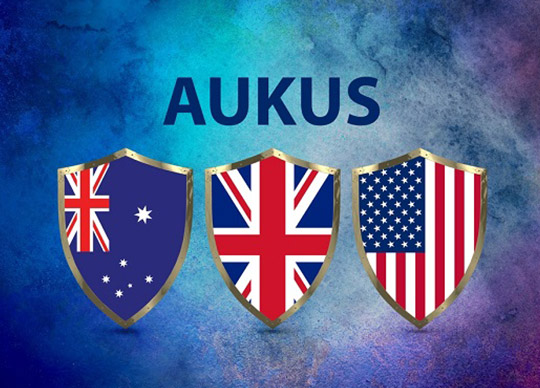
Strategic logic: AUKUS addresses perceived capability shortfalls in the Indo-Pacific, aiming to deter coercion in maritime domains. For the U.S. and U.K., AUKUS expands operational reach and interoperability with a Pacific partner; for Australia, the pact accelerates entry into high-end undersea warfare and deepens defence industrial ties. The agreement has also sparked regional debate over proliferation risks and strategic impact, especially in relation to China, which views AUKUS as an escalatory move.
Operational and political hurdles: Building SSNs and industrial supply chains takes years—and political consensus and legislative arrangements in allied capitals are complex. Questions remain about basing, crewing, and long-term sustainment costs, alongside how to synchronize AUKUS with existing regional forums like ASEAN that favor non-alignment and confidence-building.
5. Convergence and Competition: How Euro Atlantic and Indo Pacific Alliances Interact
The security environment of the 21st century is increasingly defined by the interconnectedness of global alliances. No longer can the Euro-Atlantic and Indo-Pacific regions be viewed as isolated theatres of military and political engagement. Instead, security developments in one region often have direct implications for the other. NATO’s renewed focus on high-intensity deterrence in Europe—driven largely by Russia’s aggressive behaviour—runs in parallel with the strengthening of regional security pacts in the Indo-Pacific, such as the Quad (United States, Japan, India, Australia) and AUKUS (Australia, United Kingdom, United States). Together, these developments reflect a broader strategic trend: democracies are consolidating partnerships across continents to counter evolving threats, from territorial aggression to cyber warfare.

Operational convergence between these alliances is becoming more visible. Intelligence sharing now extends across the Atlantic and Pacific, enhancing early warning systems for both traditional and hybrid threats. Joint military exercises increasingly involve participants from both theatres, allowing forces to learn from one another and improve interoperability. Standardising arms procurement and logistics systems enables faster deployment and sustained operations in geographically distant but strategically linked regions. This integration strengthens the capacity of democratic states to project power and respond coherently to crises—whether in Eastern Europe, the South China Sea, or the Korean Peninsula.
Yet, convergence also introduces strategic challenges. A broader network of partners means that any miscalculation or misinterpretation of intent—particularly between nuclear-armed states—could have cascading consequences. Coordinating responses across diverse political systems and regional priorities adds layers of complexity to crisis management. Moreover, as cyber and space domains become central to military competition, the speed and ambiguity of attacks in these arenas increase the risk of unintended escalation.
Policymakers therefore face a delicate balancing act: strengthening deterrence through alliance integration, while maintaining robust diplomatic channels to manage disputes and prevent conflicts from spiralling out of control.
Indo-Pacific Alliances refer to strategic partnerships and defense agreements among countries in the Indo-Pacific region aimed at maintaining security, economic stability, and geopolitical balance. These alliances have become increasingly important due to rising tensions, particularly with China’s growing influence.
1. Quad (Quadrilateral Security Dialogue) – Comprising the United States, India, Japan, and Australia, Quad promotes a free, open, and inclusive Indo-Pacific. It focuses on maritime security, disaster relief, cybersecurity, climate action, and health cooperation.
2. AUKUS – A trilateral security pact between Australia, the United Kingdom, and the United States, launched in 2021. It centers on sharing nuclear-powered submarine technology, cyber capabilities, artificial intelligence, quantum technologies, and electronic warfare expertise.
3. Five Power Defence Arrangements (FPDA) – Established in 1971 between Australia, Malaysia, New Zealand, Singapore, and the UK. It involves consultation and joint exercises in case of external threats, though it’s not a binding defense guarantee.
4. ANZUS & Bilateral Treaties – ANZUS (1951) links Australia, New Zealand, and the US in defense cooperation. The US also maintains defense treaties with Japan and South Korea.
Overall, Indo-Pacific Alliances aim to safeguard regional stability, protect maritime trade routes, and ensure a balance of power in a strategically vital region.
6. The Military Spending Race: Numbers, Drivers and Implications
Global military spending surged sharply in 2024, reaching a record $2.718 trillion, according to data from the Stockholm International Peace Research Institute (SIPRI). This marks a 9.4% increase compared to 2023—the steepest annual rise since at least 1988—and continues a decade-long upward trend in defence expenditures worldwide. The top spenders, including the United States, China, and Russia, all raised their defence budgets significantly, while medium and smaller powers also joined the trend.
The drivers of this surge are both immediate and long-term. Active conflicts, rising geopolitical tensions, and rapid technological change are pushing nations to not only replace depleted military stocks but also modernise their forces to remain competitive in an increasingly complex security landscape.
- Direct War Needs and Stockpile Replenishment
The war in Ukraine remains a central factor in the spending surge, as Western nations supply Kyiv with vast amounts of ammunition, air defence systems, and artillery. This has drained existing stockpiles in NATO countries, forcing urgent replenishment orders to defence manufacturers. Similarly, ongoing tensions and conflicts in the Middle East—such as flare-ups in the Israel–Palestine crisis—drive regional militaries to restock weapons and ammunition. This “just-in-case” approach ensures that countries have reserves ready for rapid deployment in the event of escalation.
- Investments in Modernisation
Modern conflicts increasingly demand high-tech capabilities. Military budgets now allocate larger portions to next-generation missiles, advanced fighter aircraft, hypersonic weapons, integrated air and missile defence systems, cyber warfare capabilities, and space-based surveillance. Artificial intelligence (AI)-enabled weapons and autonomous systems are being prioritised to gain decision-making speed and operational efficiency. Countries are recognising that military superiority will hinge on mastery of these technologies rather than just troop numbers.
- Alliance Commitments and Interoperability
Membership in military alliances such as NATO, AUKUS, and regional security partnerships comes with obligations. Allies must ensure their systems are interoperable—able to communicate, share data, and coordinate in real time. This often requires standardised procurement, upgrading communication platforms, and establishing prepositioned logistics hubs for rapid reinforcement. For example, NATO’s eastern flank defences depend on the ability of multinational battlegroups to operate seamlessly together, which drives investments in compatible equipment, command systems, and infrastructure.
- Industrial Policy and Economic Strategy
In some cases, defence spending serves a dual purpose: enhancing national security while stimulating the domestic economy. Governments use large military contracts to boost manufacturing, create skilled jobs, and drive innovation in high-tech sectors. For instance, investments in aerospace or AI-driven weapons often have spillover effects into civilian industries. This blending of defence policy with economic planning can strengthen a country’s industrial base, but it also risks encouraging “military Keynesianism”—spending that prioritises arms production over social services.
Implications
While higher defence spending strengthens military readiness, it carries risks. Resources may be diverted from education, healthcare, and infrastructure, exacerbating inequality and domestic discontent. The accelerated arms race can further militarise global competition, increasing the risk of miscalculation. Moreover, the spread of advanced military technologies, such as AI-guided weapons, heightens the potential for destabilising proliferation. Smaller economies face the added challenge of deciding whether to pursue independent procurement programs or partner with larger defence producers—decisions that will shape their strategic autonomy for decades.
7. Risks of Entanglement and the Management of Crises
Expanding alliances and deepening military interoperability undoubtedly enhance deterrence by presenting a united front against potential adversaries. However, they also introduce layers of complexity into crisis decision-making. Collective defence commitments—such as NATO’s Article 5, which treats an attack on one member as an attack on all—bind countries together politically and militarily in ways that adversaries closely monitor. These guarantees influence the strategic calculations of rival states, sometimes prompting them to probe alliance cohesion or exploit perceived weaknesses.
The risk lies in misperceptions about escalation thresholds. Ambiguities around when a cyberattack might justify a military response, whether maritime interdictions could trigger armed confrontation, or where the line lies between conventional and nuclear retaliation can lead to dangerous misunderstandings. In a crisis, such misinterpretations may result in unintended spillovers—where a localised incident escalates into a broader conflict involving multiple states.
To mitigate these risks, analysts recommend strengthening crisis communication channels between adversaries, ensuring calibrated signalling to avoid mixed messages, and engaging in rigorous red-team planning within alliances. By simulating worst-case scenarios, alliances can better anticipate adversary responses and reduce the chances of accidental escalation, preserving both deterrence credibility and strategic stability in an interconnected security environment.
8. Policy Options for Alliance Managers
To effectively manage alliances in today’s complex security environment, policymakers should pursue a layered and forward-looking approach across several key dimensions.
- Strengthen Resilience and Logistics
Alliances should bolster their ability to respond swiftly without triggering destabilizing signals. This means investing in stockpiles of critical supplies, strategically prepositioning equipment, and enhancing civil–military coordination. Infrastructure such as transport networks, warehouses, and coordination mechanisms ensure rapid reinforcement when needed, while clearly communicating intent to deter rather than provoke escalation. - Harmonize Doctrine
Clarity and consistency in joint military doctrine are essential—particularly in novel domains like cyber and space. Allies must define escalation thresholds, response options, and command protocols. Harmonizing doctrines reduces ambiguity in decision-making and strengthens deterrence while minimizing risks of miscalculation or uncoordinated action. - Invest in Arms Control for Emerging Domains
Emerging technologies—autonomous weapons systems, anti-satellite capabilities, and advanced AI-enabled tools—operate in a regulatory grey zone. Alliance managers should pursue arms control measures and establish guardrails that reduce inadvertent escalation. Negotiating limits or transparency protocols can help stabilize high-risk domains and build mutual confidence. - Use Layered Diplomacy
Deterrence and diplomacy must operate in tandem. Strong military posture is critical, but high-level diplomatic dialogues with competitors like Russia and China—across routine, crisis-era, and backchannel platforms—ensure there’s space to manage disputes before they spiral. Maintaining diplomatic channels helps sustain crisis-management flexibility. - Support Burden-Sharing with Targeted Contributions
Not all allies can or should match spending levels. Instead, alliances benefit from targeted capability-sharing—where countries contribute niche, interoperable assets that address specific gaps (e.g., cyber units, logistical support, domain-specific platforms). This fosters equitable burden-sharing based on capacity, not uniform budgets.
9. What to Watch Next (Short-Term Indicators)
In the rapidly shifting global security environment, several short-term developments merit close monitoring. These indicators can reveal emerging trends in alliance priorities, regional stability, and the trajectory of global military competition.
- 1. NATO Posture and Force Rotations on the Eastern Flank
Watch for new announcements from NATO regarding troop deployments, rotational schedules, and permanent basing along the eastern flank—particularly in Poland, the Baltic states, and Romania. Adjustments to force posture or command structures will signal how seriously the Alliance is preparing for sustained deterrence against Russia. Major decisions will likely be accompanied by exercises, infrastructure upgrades, and prepositioned equipment expansions. (Source: nato-pa.int) - AUKUS and Australia’s SSN Programme
Australia’s nuclear-powered submarine (SSN) programme under the AUKUS agreement is a key Indo-Pacific development. Timelines for construction, technology transfer, and port infrastructure upgrades—alongside legislative and industrial milestones—will indicate whether the programme is on track to meet its ambitious schedule. Delays or breakthroughs will shape both regional deterrence and alliance credibility. (Source: House of Commons Library) - QUAD Initiatives in Technology and Maritime Security
Joint QUAD activities in critical and emerging technologies—such as semiconductors, quantum computing, and undersea communications—are becoming a strategic barometer. Maritime exercises and India’s willingness to participate in more security-oriented initiatives will signal the group’s ability to act cohesively in crisis scenarios. (Source: DFAT) - Global Military Spending Trends
Annual data releases from SIPRI and national defence budget statements will reveal whether the current military spending surge continues. Increases, especially in Asia and Europe, could point to a sustained arms race, while flat or reduced budgets may suggest strategic recalibration. Monitoring procurement priorities—cyber, missile defence, naval platforms—will be critical for understanding capability development trajectories.
Read More:Martindox
