Physical AI and the Rise of Intelligent Robots
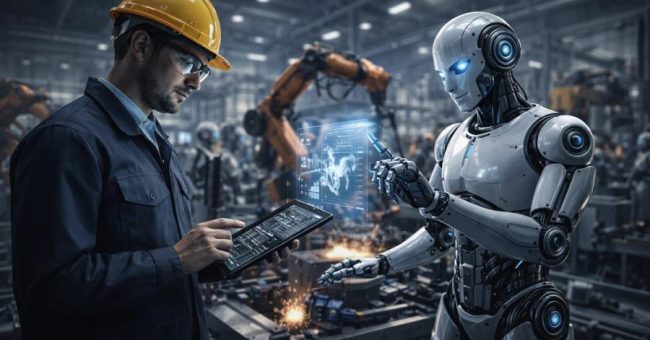
Artificial intelligence is moving beyond computer screens and entering the physical world. For years, AI development has focused on chatbots, digital assistants, image generation, data analysis and software automation. Today, advances in robotics are extending these capabilities into factories, warehouses, hospitals, laboratories and other real-world environments.
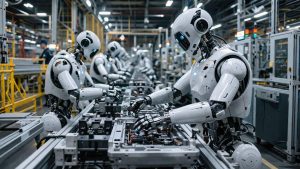
This emerging field is widely known as Physical AI. It combines artificial intelligence with machines that can perceive their surroundings, understand instructions, make decisions and perform physical tasks. Unlike traditional robots that repeatedly follow pre-programmed instructions, AI-powered robots are being developed to respond to changing environments and handle a wider range of activities.
The development of Physical AI could transform manufacturing, healthcare, logistics, construction and everyday life. Companies are investing in humanoid robots, autonomous mobile machines, intelligent robotic arms and systems that combine cameras, sensors, computing hardware and AI models.
However, the technology remains at different stages of maturity. Industrial automation is already established across many industries, while general-purpose humanoid robots are still being tested and developed for broader commercial use.
The central question is no longer simply whether machines can perform physical tasks. It is whether intelligent robots can perform them safely, reliably and economically enough to become a practical part of everyday work.
What Is Physical AI?
Physical AI refers to artificial intelligence systems that interact with and operate in the physical world through robots, machines or other embodied systems.
Traditional software AI works primarily with digital information. It can generate text, analyse documents, recognise images or write computer code. Physical AI extends intelligence into environments where machines must understand objects, movement, distance, force and changing conditions.
For example, a traditional industrial robot might be programmed to move a component from one fixed position to another. A more adaptive AI-powered robot could use cameras and other sensors to identify the component, estimate its position, plan a movement and adjust its actions if the object is unexpectedly displaced.
This capability requires several technologies to work together:
- Artificial intelligence models: Help interpret instructions, recognise objects and plan actions.
- Computer vision: Allows machines to interpret visual information from cameras.
- Sensors: Provide information about distance, movement, pressure, position and the surrounding environment.
- Robotics and actuators: Convert decisions into physical movement.
- Computing hardware: Processes data and supports real-time decisions.
- Control and safety systems: Help ensure that movements remain stable, accurate and within defined limits.
The integration of these technologies is what makes Physical AI different from AI software operating only in a digital environment.
Google DeepMind’s Gemini Robotics research illustrates this approach by connecting multimodal AI models with robotic actions and real-world reasoning. Its work demonstrates how AI can help robots interpret instructions and perform physical tasks, although broad general-purpose deployment remains a developing challenge.
How Does Physical AI Work?
Physical AI generally involves a continuous cycle of perception, reasoning, action and feedback.
1. Perception: Understanding the Environment
A robot collects information through cameras, sensors and other instruments. It may identify objects, recognise obstacles, estimate distances or determine where a component is located.
The quality of this information is crucial. Poor lighting, reflective surfaces, unexpected movements or unfamiliar objects can make perception more difficult.
2. Reasoning and Planning
AI models interpret available information and help determine what the robot should do next. Depending on the system, this may involve selecting an object, planning a route, deciding how to grip an item or breaking a complex instruction into smaller tasks.
For example, a warehouse robot may need to identify a package, determine its location, avoid obstacles and calculate a safe route to a delivery point.
3. Action and Movement
The robot converts its plan into physical movements using motors, robotic arms, wheels, legs, grippers or other mechanisms.
Accurate movement requires coordination between AI models and conventional control systems. An intelligent plan is not enough if the robot cannot execute it precisely.
4. Feedback and Adaptation
Sensors provide new information as the robot moves. The system can use this feedback to detect errors, adjust its position or respond to changing conditions.
This cycle can make robots more adaptable than systems that rely entirely on fixed instructions. Nevertheless, adaptation is not the same as unlimited intelligence: performance still depends on training, hardware, environmental conditions and safety constraints.
Physical AI vs Traditional Robotics
Traditional robotics remains essential to modern manufacturing. Many conventional robots are highly accurate, fast and reliable when operating in structured environments with clearly defined tasks.
Physical AI adds more flexible perception and decision-making capabilities, potentially allowing robots to handle a wider range of situations.
| Feature | Traditional programmed robotics | AI-powered Physical AI |
|---|---|---|
| Task execution | Often follows predefined instructions | Can adapt actions using AI and sensor feedback |
| Environment | Best suited to structured tasks | Can be designed for more variable environments |
| Object recognition | May rely on fixed sensors and rules | Can use advanced vision and AI models |
| Flexibility | Changes may require reprogramming | Some systems can adapt to new tasks with less reprogramming |
| Reliability | Mature and predictable in suitable applications | Depends on model performance, hardware and operating conditions |
| Main challenge | Handling unexpected variation | Ensuring safe, consistent and economical operation |
Physical AI does not make traditional automation obsolete. In many factories, conventional robots will remain the better choice for repetitive, high-speed tasks. AI-powered systems are particularly interesting where objects, instructions or working conditions vary.
Humanoid Robots: Bringing AI into Human Environments
Humanoid robots are among the most visible developments in Physical AI. They are designed with human-like features, such as a torso, arms, legs or hands, although their exact designs vary considerably.
The attraction of humanoid robots is that many workplaces were built for people. Doors, stairs, shelves, tools and workstations are designed around human movement. A robot with suitable mobility and manipulation capabilities could potentially work in some of these environments without requiring every facility to be redesigned.
Humanoid robots are being developed for tasks such as:
- Moving and sorting materials.
- Handling objects on production lines.
- Transporting items within warehouses.
- Performing selected inspection tasks.
- Assisting with repetitive activities in industrial environments.
Companies including Tesla, Figure AI, Boston Dynamics and Agility Robotics are developing different approaches to advanced robotics and humanoid systems.
However, a human-like shape does not automatically make a robot useful. Commercial success depends on whether it can complete a task safely, repeatedly and at a competitive cost.
Walking, maintaining balance, handling delicate objects, operating around people and recovering from unexpected situations remain difficult engineering challenges. Demonstrations in controlled environments should therefore not be confused with proof of widespread commercial readiness.
Physical AI in Manufacturing and Industrial Automation
Manufacturing is one of the most practical areas for Physical AI because factories already use robots, sensors, computer systems and automated production lines.
The International Federation of Robotics reported that 542,000 industrial robots were installed worldwide in 2024, more than twice the annual number recorded a decade earlier. The number of industrial robots operating in factories globally reached approximately 4.66 million that year. These figures describe industrial robotics overall, not exclusively AI-powered robots.
Physical AI could expand industrial automation through several applications.
Intelligent Quality Inspection
AI-enabled vision systems can examine products, identify visible defects and help detect manufacturing inconsistencies. This can improve inspection speed, although accuracy depends on the quality of the system and the products being inspected.
Adaptive Assembly
Robots can use vision and feedback to position components, adjust their movements and perform selected assembly tasks. More flexible systems could be useful where product designs or component positions change frequently.
Predictive Maintenance
AI can analyse machine performance, temperature, vibration and other sensor data to identify patterns that may indicate equipment problems. This can help maintenance teams investigate potential failures before they interrupt production.
Material Handling
Autonomous mobile robots can move materials between production areas, storage facilities and packing stations. AI can help these systems navigate around obstacles and respond to changing workflows.
For manufacturers, the objective is not necessarily to replace every worker or machine. It is to improve productivity, consistency, workplace safety and the ability to adapt production processes.
Physical AI in Healthcare and Medicine
Healthcare is another important area for robotics, although medical applications require particularly high levels of safety, reliability and regulatory oversight.
Robotic systems are already used in surgical assistance, rehabilitation, laboratory automation and hospital logistics. AI can potentially improve how some of these systems interpret information, assist operators or adapt to individual tasks.
Robotic-Assisted Surgery
Surgical robotic systems can help trained clinicians perform selected procedures using specialised instruments and computer-assisted controls. These systems do not mean that a robot independently replaces a surgeon. Clinical decisions, supervision and responsibility remain essential.
Rehabilitation and Assistive Robotics
Robotic devices can support selected rehabilitation exercises and help some patients practise controlled movements. AI may help adapt exercise parameters or monitor performance, depending on the device and clinical setting.
Laboratory Automation
Robotic systems can move samples, prepare materials and perform repetitive laboratory procedures. Combining robotics with AI may help laboratories manage complex workflows and reduce some manual handling requirements.
Hospital Logistics
Autonomous robots can transport supplies, medicines or equipment within suitable hospital environments. Such applications may reduce routine transport work and allow staff to focus on patient care.
The main barriers include safety, privacy, cost, regulatory approval, integration with clinical systems and the need for qualified human oversight. Physical AI should be viewed as a tool that may support healthcare professionals rather than an automatic substitute for medical expertise.
Physical AI in Warehouses, Logistics and Transportation
Warehouses and distribution centres face constant pressure to move products accurately and efficiently. Their environments are also increasingly suitable for autonomous machines because many tasks follow recurring patterns.
AI-powered mobile robots can transport goods, identify packages, navigate designated areas and coordinate selected material-handling activities. Robotic picking systems can use cameras and gripping mechanisms to handle objects that vary in shape or position.
The International Federation of Robotics reported that professional service robots used for transportation and logistics represented a major segment of professional service robot sales in its 2026 report, which covered shipments during 2025.
Potential benefits include faster material movement, improved inventory workflows and reduced exposure to certain repetitive or physically demanding tasks.
However, logistics robots must operate safely around people, vehicles and other machines. Unpredictable environments, navigation errors, equipment failures and cybersecurity risks can affect performance.
Self-driving vehicles are related to Physical AI because they combine perception, planning and physical action, but road-going autonomous vehicles face a separate set of technical, regulatory and public-safety requirements.
Leading Countries in Physical AI and Robotics
Physical AI is a global field, and no single measure captures every country’s capabilities. Industrial robot installations, robot density, AI research, semiconductor manufacturing, robotics companies and humanoid development each reveal different parts of the landscape.
The following countries have important roles in robotics and related technologies.
China: Scale and Industrial Deployment
China is the world’s largest market for industrial robot installations. According to the International Federation of Robotics’ 2025 report, China accounted for 54% of global industrial robot installations in 2024.
Its robotics ecosystem includes industrial automation, electric-vehicle manufacturing, electronics, mobile robots and emerging humanoid systems. China’s large manufacturing base provides opportunities to test and deploy robotics across multiple industries.
Its main advantages include manufacturing scale, a large domestic market and an extensive industrial supply chain. Challenges include ensuring dependable performance, developing advanced capabilities and making new systems commercially viable across different settings.
United States: AI Research and Robotics Innovation
The United States has a significant role in AI research, software development, robotics engineering and advanced computing. Its ecosystem includes major technology companies, robotics start-ups, universities and industrial manufacturers.
Google DeepMind’s robotics research illustrates efforts to connect multimodal AI models with physical actions. Companies such as Figure AI, Tesla, Boston Dynamics and Agility Robotics are also pursuing different approaches to robotic mobility, manipulation and humanoid systems.
The United States benefits from a strong research and investment ecosystem. However, progress in AI software does not automatically guarantee that every robotic system will be reliable, affordable or ready for mass deployment.
Japan: Industrial Robotics and Precision Engineering
Japan has a long-established robotics industry, with capabilities in industrial automation, precision machinery, sensors and manufacturing equipment.
Japanese companies have played important roles in factory robotics, particularly in sectors such as automotive production and electronics. This experience provides a foundation for integrating more adaptive AI into existing industrial systems.
Japan also faces demographic and workforce challenges that have increased interest in automation, including applications in manufacturing, logistics and selected care-related settings.
South Korea: Electronics, Manufacturing and Automation
South Korea combines a major electronics industry with advanced manufacturing and industrial automation. Its factories use robots in sectors including automotive production, electronics and machinery.
The country also has strengths in semiconductors and other technologies that support AI-enabled systems. These capabilities matter because intelligent robots depend not only on AI models but also on sensors, computing hardware, batteries, motors and reliable manufacturing.
Germany: Industrial Automation and Engineering
Germany is an important industrial robotics market and has extensive experience in automotive engineering, machinery and factory automation.
Its industrial base creates opportunities to integrate AI with established manufacturing processes. German companies and research institutions also contribute to automation, machine vision, industrial software and human-machine collaboration.
The challenge is to deploy new AI-enabled systems while maintaining the safety, quality and reliability standards required in advanced manufacturing.
These countries are not the only participants in Physical AI. Other economies are developing robotics research, manufacturing capabilities and specialised applications. Their relative positions also differ depending on whether the measure is industrial installations, AI research, robot density or humanoid development.
Important distinction: Industrial robot installation figures measure overall industrial automation, not a country’s complete Physical AI capability. They should not be interpreted as a direct ranking of AI intelligence or humanoid robot performance.
Leading Companies Developing Intelligent Robots
Physical AI is being developed by companies working across hardware, software, AI models and industrial automation. Some focus on humanoid robots, while others specialise in industrial arms, autonomous mobile robots or the AI systems that support robotic behaviour.
Boston Dynamics
Boston Dynamics develops mobile robots, including quadruped robots and humanoid platforms. Its work focuses on mobility, balance, manipulation and operating in complex physical environments.
Figure AI
Figure AI is developing general-purpose humanoid robots intended to perform physical work. Its approach combines robotic hardware with AI-based capabilities for perception, interaction and task execution.
Tesla
Tesla is developing its Optimus humanoid robot programme alongside its work in electric vehicles, manufacturing and AI. Its longer-term ambitions include using robots for selected tasks in industrial and other environments, although deployment scale and capabilities should be assessed using verified operational evidence.
Agility Robotics
Agility Robotics develops humanoid robots, including Digit, which is designed for material handling and logistics-related work. Its focus illustrates how humanoid robots may initially be deployed for specific commercial tasks rather than general-purpose household assistance.
ABB Robotics
ABB provides industrial robots, automation systems and software for manufacturing and other industrial applications. Its products illustrate the established industrial robotics sector into which more AI-enabled capabilities can be integrated.
Google DeepMind
Google DeepMind develops AI models and research intended to help robots understand instructions, interpret their surroundings and perform physical tasks. Its robotics work highlights the importance of AI software alongside mechanical engineering and control systems.
These organisations represent different parts of the ecosystem. An AI research company, a humanoid robot manufacturer and an industrial automation supplier should not be treated as if they produce identical technologies or compete in exactly the same market.
What Are the Main Benefits of Physical AI?
Physical AI could deliver benefits across industries, although results will depend on the task and implementation.
Higher Productivity
Robots can perform suitable repetitive tasks over extended operating periods. AI may make some systems more flexible when handling changes in products or working conditions.
Improved Workplace Safety
Robots can be used for selected activities involving hazardous materials, heavy loads, extreme temperatures or other difficult conditions. Safe deployment still requires risk assessment, guarding, monitoring and emergency procedures.
Greater Operational Flexibility
Traditional automation can be expensive to modify when production requirements change. AI-enabled perception and planning may allow certain robots to adapt to new objects or instructions with less manual reprogramming.
Support for Ageing Populations
In countries facing ageing populations or shortages in some occupations, robotics may help support logistics, selected care activities, rehabilitation and other services. Such systems can assist people, but they do not replace the human relationships and judgement required in many care settings.
More Consistent Quality
Robots can repeat defined movements with precision. When combined with suitable sensors and inspection systems, they can help improve consistency and identify certain production defects.
New Industries and Skilled Jobs
Physical AI could create demand for robotics engineers, technicians, AI specialists, safety professionals, maintenance staff and systems integrators. The distribution of these opportunities will depend on training, investment and the speed of adoption.
The Risks and Limitations of Physical AI
Despite its potential, Physical AI faces technical, economic and social challenges.
High Development and Deployment Costs
Robots require hardware, software, testing, maintenance, integration and suitable facilities. Humanoid systems may be particularly expensive to develop and operate. A demonstration of technical capability does not establish that a robot is commercially competitive.
Reliability in Unpredictable Environments
Real-world conditions are complicated. Objects can move unexpectedly, surfaces can be slippery, lighting can change and people may behave in ways that a robot has not encountered before.
A robot that performs well in a controlled demonstration may struggle in a busy workplace. Reliable performance across different conditions remains a major challenge.
Employment and Workforce Transition
Automation may reduce demand for some repetitive tasks while increasing demand for technical and supervisory skills. The effect will vary by occupation, industry and country.
Businesses and governments will need to consider retraining, education and transition support so that workers can adapt to changing requirements.
Safety and Accountability
A robot that moves heavy objects or operates near people can cause harm if it malfunctions. Developers and operators need to establish responsibility, testing standards, emergency procedures and appropriate human supervision.
Cybersecurity and Privacy
Connected robots can collect sensitive information and may rely on networked software or remote updates. Weak security could expose systems to unauthorised access or operational disruption.
Cameras and sensors used in workplaces and public settings can also raise privacy concerns.
Energy and Environmental Costs
Robots require electricity, computing resources, materials and replacement components. Their environmental impact depends on manufacturing, energy sources, operating efficiency, maintenance and product lifespan.
Physical AI will not automatically be sustainable simply because it improves productivity.
Will Physical AI Replace Human Workers?
Physical AI is likely to change many jobs, but the scale and timing of its effects remain uncertain.
Some tasks involving repetitive lifting, sorting, inspection or material movement may become more automated. Other jobs require communication, judgement, accountability, adaptability and human interaction that current robots cannot reliably provide across all situations.
The most realistic outcome in many sectors may be a combination of human workers and intelligent machines. Robots could handle selected physical tasks while people supervise operations, resolve exceptions, maintain equipment and make higher-level decisions.
The effects will not be evenly distributed. Workers in highly automated industries may experience different changes from those in small businesses, informal employment or occupations involving complex human relationships.
Education and technical training will therefore be important. Workers may benefit from skills in robotics maintenance, AI-assisted workflows, safety management, data analysis and equipment operation.
Governments and businesses will also need to consider how productivity gains are shared and how workers are supported when their roles change.
What Does the Future of Physical AI Look Like?
The future of Physical AI will depend on progress in several areas.
First, AI models must become more reliable at understanding physical environments and planning multi-step actions. Second, robots need better dexterity, mobility, sensing and energy efficiency. Third, manufacturers must reduce costs and demonstrate that robots can operate consistently in real commercial environments.
Another important development is the integration of AI models with existing industrial systems. Instead of replacing every conventional robot, companies may add AI-enabled perception, planning and monitoring to equipment already in use.
Humanoid robots may find useful roles where human-designed workspaces make their form factor practical. However, specialised machines will remain attractive when a task requires a particular movement, speed or degree of precision.
Healthcare, logistics, manufacturing and inspection are among the areas where robotic systems may expand, but adoption will depend on each application’s safety requirements, costs and measurable benefits.
The most important measure of progress will not be how human-like a robot looks. It will be whether it can solve a real problem safely, reliably and at a reasonable cost.
Official and Reliable Sources
- International Federation of Robotics — Top 5 Global Robotics Trends 2026
- International Federation of Robotics — World Robotics 2025: Global Robot Demand in Factories
- International Federation of Robotics — World Robotics 2025: Industrial Robots Executive Summary (PDF)
- Google DeepMind — Gemini Robotics: Bringing AI into the Physical World
- Google DeepMind — Gemini Robotics 1.5
- International Federation of Robotics — Global Sales of Professional Service Robots Surge
- Stanford Institute for Human-Centered AI — AI Index Report 2026
